-
 “We had over 6,000 pounds, and last year we had nothing,” said Karen Gillis, manager of Kotzebue’s Copper River plant. She said it’s a good start for the nation’s northernmost commercial fishery after years of dismal returns and a crash two years ago.
 -

-
 With the deadline for comments on the federal subsistence program fast approaching, many subsistence users say they are concerned about potential changes.
 -
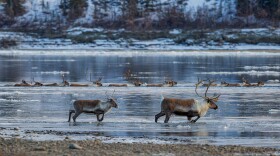 The latest estimate for the Western Arctic Caribou Herd is 121,000, a steep drop from 2023. The last time the herd’s numbers were this low, Jimmy Carter was president — almost 50 years ago.
 -
 Representatives from several Indigenous-led organizations discussed co-management strategies at the Alaska Federation of Natives convention panel.
 -
Many Alaskan salmon fisheries use escapement numbers, which count how many fish make it from the ocean and through a weir or test fishery on their way to spawning grounds. The numbers allow state biologists to set fishing openings and closures and to get a sense of the overall health of the fishery.But the Kotzebue test fishery that helped track those numbers, located near Kiana along the Kobuk River, closed several years ago.
-
 The U.S. House debated the resolution today and is expected to vote on it this afternoon.
 -
 Some caribou bounced away from roads, moved back and forth without crossing, or traced along the roads. On average, the study found caribou that came in contact with roads were delayed nine days from their normal migrations.
 -
 The short and straightforward report published in the journal Arctic, Antarctic, and Alpine Research (AAAR) seeks to sum up a long-term, complex issue.
 -
 The Pacific herring is the only known herring species in Alaska — at least, for now. But University of Alaska Fairbanks researchers say herring further north might be a separate species.

© 2026
KOTZ 720 AM and KINU 89.9 FM --- Public media based in Kotzebue, serving Northwest Alaska and beyond!
Play Live Radio
Next Up:
0:00
0:00
Available On Air Stations


