
Local News

Ben Townsend
/
KNOM
The Weather Service says travel throughout the region will be dangerous to impossible through the weekend and recommends traveling only in an emergency and with survival gear.


copyright Seth Kantner

Desiree Hagen
/
KOTZ

Desiree Hagen
/
KOTZ
Rural Alaska
-
 Dustin KoehlerThe plane crashed onto an ice floe after experiencing “severe icing conditions," killing all nine passengers and the pilot.
 -
 Katie Basile/KYUKThe state Department of Fish and Game says the bear culling is working, but critics say there's no proof.
 -
 Desiree Hagen/KOTZ“Our people need to be heard in their voice,” said Aucha Kameroff, the group’s leader. “One of the voices that we have as people in rural Alaska, or any place, is by voting.”
 -
 Paige Sparks/KTOOFederal officials recently announced that households that lost food purchased with federal food assistance will be able to have some of it replaced.


State News
-
 James Oh/Alaska Public MediaAlaska has allowed individuals to contribute unlimited sums to candidates since a federal appeals court struck down the state’s limits in 2021 as unconstitutionally low. Ballot Measure 1 aims to limit the influence of big-money donors on state and local elections.
 -
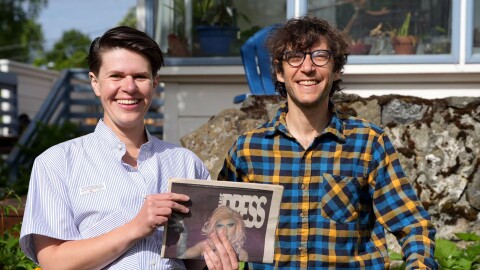 Chris Bieri/Anchorage Daily NewsThe hope for the relaunched Anchorage Press is to get back to its alternative, mid-'90s roots.
 -
 Liz FergusonRepublican candidate Click Bishop for governor and his independent running mate, Greta Schuerch, visited Kotzebue last week, as part of a statewide tour ahead of the August 18 primaries.
 -
 Clarise Larson/KTOOEpidemiologists don't know yet whether the cases are part of the national outbreak centered in the Midwest. They urge Alaskans to wash fruits and veggies and get tested if they feel sick.


News from NPR
-
 Kane was followed in the voting by Kylian Mbappé. Spain star Alexia Putellas won her third women's Ballon d'Or. Outside, fans packed the streets and climbed light poles near the London Palladium.
 -
 The NFL, Apple Music and Roc Nation announced Monday night that Jay-Z will be the featured performer for the halftime festivities on Feb. 14 at SoFi Stadium in Inglewood, California.
 -
 The Milwaukee Brewers are one victory from their first World Series title after routing the Tampa Bay Rays 10-1 on Monday night thanks to a trio of young players who have shined in October.
 -
 A localized ceasefire between Ukraine and Russia took effect early Tuesday ahead of a humanitarian mission brokered by U.S. first lady Melania Trump, as missile attacks resumed in Kyiv.


