-
 The phenomenon known as “rusting rivers” happens when once-clear streams release highly acidic and metal-laden water, which pose a direct threat to fish and vegetation. It’s happening throughout Alaska’s Brooks Range.
 -
 “What we see in the Arctic is that plants will take [mercury] up and then store it, and when they die, rather than decaying and re-releasing that mercury, they're actually frozen and stored in the permafrost,” Smith said. “So you have this big accumulation in stores of mercury in permafrost.”
 -
 “It's getting faster and more dramatic. So there's quite a bit of change,” Grosse said. “We see lake change. Lots of lakes are draining in this region over the last years.”
 -
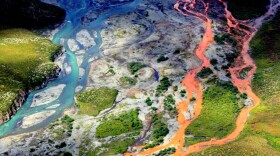 “We noticed that the stream had changed color from this pristine, clear water to a bright orange,” O’Donnell said. “There were no fish — all the fish had left.”
 -
 In the Northwest Arctic, runoff from permafrost thaw is turning rivers and streams a rusty orange color, releasing extremely acidic water, and creating dead zones for plants and animals
© 2026
KOTZ 720 AM and KINU 89.9 FM --- Public media based in Kotzebue, serving Northwest Alaska and beyond!
Play Live Radio
Next Up:
0:00
0:00
Available On Air Stations


